Просмотр новости
Найдите то, что Вас интересует
 Спутники
 РН
РН SpaceX
 Роскосмос
 NASA
NASA
СпутникиРНSpaceXРоскосмосNASALogging off is now the law for most kids and teenagers.
Sign up for the Slatest to get the most insightful analysis, criticism, and advice out there, delivered to your inbox daily.
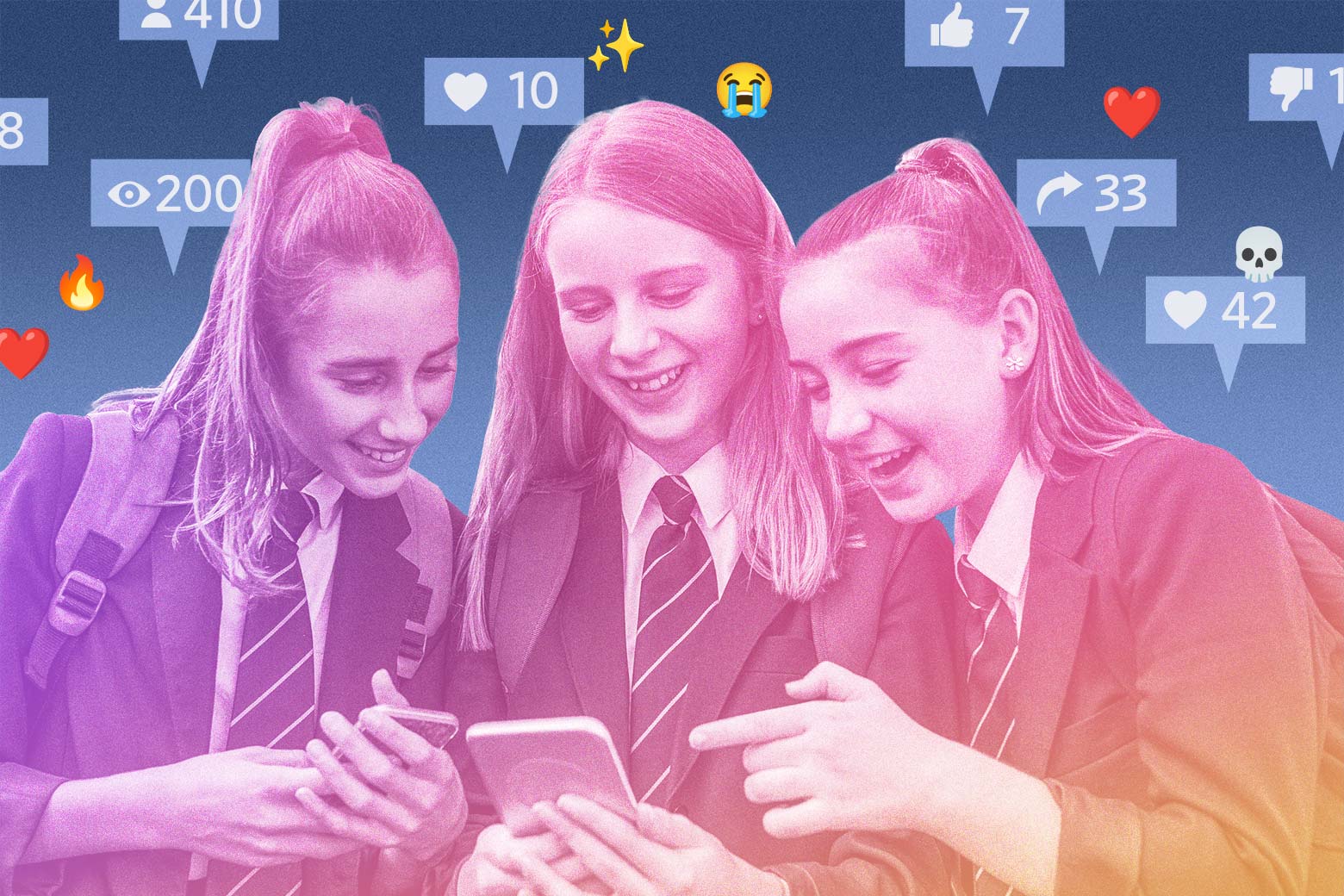
Keir Starmer, Britain’s notoriously flaccid prime minister, has shocked the nation by actually doing something impactful this week. On Monday, he gave a speech announcing that from spring 2027, everyone under the age of 16 in the U.K. will be banned from social media. This will include all the widely used platforms like Facebook, Instagram, TikTok, and Snapchat. It comes after Meta and YouTube were found liable in March for intentionally making their products addictive and harming young people in the process. The ban—along with smart phones being banned in schools in the U.K. in April—is the end result of a government “consultation” on improving online safety for children. It was the second-largest government consultation in the country’s history, drawing 116,000 public responses. People have a lot of opinions about this. The most popular one doing the rounds on social media here right now is a teen who was asked by BBC News what she intends to do with all her newfound free time. “Stare at a wall,” she replied.
Yet the darkest implications of the law may be for adults, not kids.
The U.K. is not the first country to take this step. That was Australia, at the end of last year. We’re unlikely to be the last, either. Germany’s ruling party backs a similar social media ban, as does French President Emmanuel Macron. Spain, Portugal, and Canada have bans in the pipeline too. Our ban, however, goes further than Australia’s, and has therefore been dubbed the “Australia-plus” scheme. Ours will also affect some gaming platforms as well as social media in its strictest sense, and people under 18 will not be allowed to access “romantic roleplay” chatbots. An online curfew for 16- and 17-year-olds is also being floated, which does seem really quite an insane law to impose on a group of people who have just recently been deemed mature enough to vote (yes, we let them do that here at 16).
Naturally, there are some robust arguments in favor of a ban like this. Social media is not an unalloyed good; far from it. You know that, I know that, and the kids know it, too. According to recent polling for a think tank called the New Britain Project, half of 16-to 24-year-olds wish they’d spent less time on their phones, and three-quarters are in favor of tougher regulations to keep young people away from harmful content on social media. Tech companies have been pressed to make their platforms safer, and broadly they have failed, or not put in that much effort in the first place. A ban like this gives parents another much-needed weapon in the arsenal against screen time: No, you can’t have TikTok, because the government said it’s not allowed.
But there are also many, many arguments against it. The most obvious but also perhaps the least important one, in its way, is that it won’t work in practice. Which, broadly, it won’t. We all remember being teenagers. You get around things, or you find ways to hang out that are out of sight of authority figures. Kids in Australia, for instance, have been using A.I. to give themselves mustaches to trick age-verification software into thinking they’re adults, which says a lot both about teen ingenuity and about the crappiness of the tech we’re supposed to be using to tell how old people are. It will be difficult to enforce, which Starmer acknowledged. But then we’ve accepted that despite the ease with which enterprising teenagers can find ways to buy booze, it’s sensible to have laws intended to stop them doing so.
More interesting are the ideological and sociological reasons why the ban may have unintended negative consequences. There are fears that if young people can’t manage to get on places like Instagram and TikTok, then they will turn to unregulated spaces instead. If a 12-year-old manages to get themselves a social media account, and sees content there that is upsetting or otherwise harmful, they may feel that they can’t talk to their parents about it because they’ve been doing something that isn’t allowed. There are those who argue that suddenly allowing young people access to social media at 16 might be overwhelming, with its own associated harms, like going from a dark room to full sunlight. It’s all tied up with wider concerns about how top-down governmental controls over internet access will affect adults too. Handing over power to restrict who sees what content online to governments is a dangerous precedent. Not to mention the legitimate worries about data breaches if, for instance, passports are required to be uploaded to verify age.
It’s also true that kids simply enjoy finding things of innocent interest to them on social media. According to the Status of Girls’ Rights in the U.K. Report of 2024, 9 out of 10 girls and young women say social media brings them happiness. The evidence that social media is making children unhappy in general is pretty shaky as it stands. There is a youth mental health crisis, a well-documented downturn in the well-being of young people since the 2010s. But it’s not clear how much of that can be put down to social media. Does Snapchat make teens sad, or do sad teens turn to Snapchat to deal with the stressors of academic pressure, tension at home, hormones, romantic strife, and lack of opportunities—in short, all the things that drive adults to the infinite scroll, too? And any population-wide studies into this kind of thing are notoriously difficult to design. How do you separate the benefits and harms of being on social media from those of just being on your phone, and of social media versus not getting enough of various other kinds of life-enhancing inputs like exposure to nature and quality time with loved ones? There are also concerns that social media can form an important part of the lives of marginalized young people in particular. Cutting off gay teenagers, say, from finding likeminded people in their age group could isolate them.
The thing is, all the discourse around this new ban is could, might, and ought to, because it’s just too soon to say what effect it will have. The only comparable ban that currently exists has only been around for six months. It might do harm; it might do good; it will likely do a bit of both to everyone it touches, and to different degrees. There is not just one experience of social media, and not just one hypothetical child accessing it.
If any of this is going to “work,” and by work I mean change the next generation’s relationship with social media to a healthier and more balanced one, it is going to need to come in conjunction with viable alternatives for what children can do with their time. Since 2010, England and Wales have lost more than two-thirds of council-run youth centers.
But as someone who is not a child and doesn’t have children, and can therefore afford to take a less emotionally invested view of the situation, I find that the move makes me uncomfortable on behalf of people over 16, too. The ban is a similar kind of approach as is taken with alcohol: a legal age restriction, which is easy enough to circumvent, but creates enough friction to make young people think twice. It’s uncomfortable because it makes us, adults, have to think about social media in the same terms as we think about alcohol: something considered a normal part of life that many of us use and think we enjoy, but that is ultimately doing us potential harm.
Maybe this ban will save children from the hungry maw of social media addiction. But it will only do so for now. Once those kids reach 16, and are finally allowed on these platforms, they’ll be exposed to all of the same dreadful shit that we get exposed to day in and day out.
What the ban essentially says is that we’ve given up expecting or incentivizing platforms to make their spaces less toxic to be on, and have instead had to boot the most vulnerable people off them altogether. Will it therefore let tech companies off the hook from clamping down on harmful and addictive content on their platforms, so long as they can say, “Well, children are protected because they’re not allowed to see it”? If so, won’t somebody please think of the adults?
Sign up for Slate's evening newsletter.