Просмотр новости
Найдите то, что Вас интересует
 Спутники
 РН
РН SpaceX
 Роскосмос
 NASA
NASA
СпутникиРНSpaceXРоскосмосNASASkagit Valley farmers, like Anne Schwartz who helped shape how we eat, are now working hard to pass the shovel to the next generation of organic growers.
A LONG TIME AGO, when the gray-haired woman on the tractor was a brown-haired woman on the tractor, farming looked like a way to change the world. It was the early 1970s and an idealistic generation was going “back to the land” for a more self-sufficient and sustainable life.
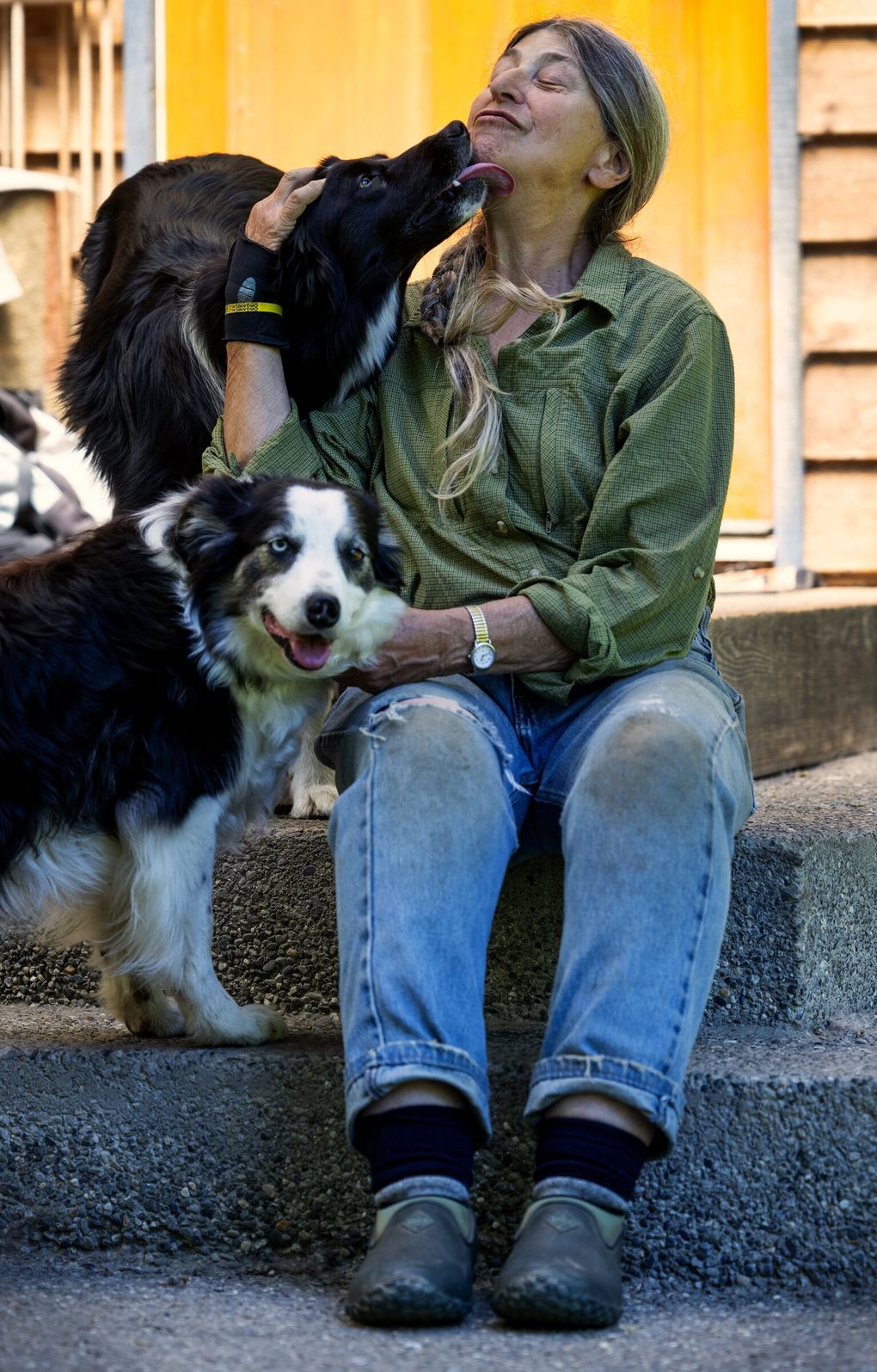
The woman is Anne Schwartz, rabble-rouser, matriarch, pioneer. She did help build a better food system through decades of work — her Blue Heron Farm in Rockport, Skagit County, was famed for everything from berries to the sweetest, snappiest Skagit Valley carrots. A tireless volunteer as well, Schwartz helped establish sounder environmental policies and organic farming regulations both locally and nationally.
Such elders of the counterculture era, inspired by landmark books like “Silent Spring” and “Diet for a Small Planet,” are now well past Social Security age. Many have died, many retired, many are more than ready to retire — but have few ways to keep their farms alive.
“My body’s worn out. Farming like we farm is hard work, and I pushed myself pretty hard,” Schwartz says on the farm recently after battling back some blackberries.
And yet, the families once fed by Blue Heron are still enjoying the land’s famous carrots, the salad greens, the tomatoes now ripening on 700 carefully spaced plants. Customers enjoy occasional ears of just-harvested sweet corn that don’t pencil out for profits but make a summer cookout memorable.
Blue Heron’s customers are now largely nourished by Long Hearing Farm, a small rural worker cooperative co-founded by Elizabeth Bragg, one of Schwartz’s former farmhands.
Schwartz maintains a few acres of Blue Heron raspberries and blueberries, which are less physically grueling, while Long Hearing takes on the more intensive harvests of mixed certified organic vegetables from arugula to zucchini, on the same land in the shadow of Sauk Mountain.
No one has really cracked the code to making local, responsibly farmed food reliably profitable. But acre by acre, person by person, some of those 1970s dreams have been reborn for a new age.
Now, as then, it requires something beyond the balance sheet.
Reaping what you’ve sownBragg was working seasonally at Blue Heron in 2018, gaining experience and filling the gaps in winter with odd jobs.
“It’s not like I had $30,000 of startup funds to start an operation of my own,” she says.
She had plenty of ideas, though — and ideals. Bragg earned a master’s degree in law and global development before deciding that food was a better — and more fulfilling — way to address the world’s linked problems. “If you want to get radicalized, just learn more about the food system,” she says.
Bragg remembers a gathering in high summer of 2018, when Schwartz called her crew together at lunch and said she was phasing out her business. She told them she would help any of them who wanted to take it on.
It was a gift beyond price, as smaller-scale farms become rarer nationwide.
Startup investments and land are out of reach for the average aspiring farmer, even as operating costs spike with pressures like record fuel prices and tariff uncertainties. Federal subsidies favor vast acres of commodity crops used for livestock feed or biofuels. Many federal supports have been canceled for the types of farms where you know the human riding the tractor or tending the tomatoes — especially ones supporting women, people of color, and others who have been historically undercounted and underrepresented as owners in the industry.
Washington state is comparatively lucky in the number of programs trying to preserve farmland and make smaller-scale farming more affordable. The nonprofit Washington Farmland Trust alone has protected more than 3,700 acres and operates a “farmer to farmer” program connecting potential sellers with buyers, among other services. Skagitonians to Preserve Farmland has been advocating and fundraising to keep the region’s rich farmland unpaved since 1989. Viva Farms in Skagit and King Counties runs an “incubator,” training prospective new farmers and providing temporary plots for starter organic farms. The Tilth Alliance — which sprang from those same 1970s growers and organizers — has steadily provided education and support for organic gardening and farming.
And yet, the number of farms in Washington state decreased nearly 11% between 2002 and 2022, according to a 2026 report from the state’s Department of Agriculture. Two-thirds of Washington producers are 55 or older; they deal with some of the nation’s highest farming costs per acre and one of the lowest profit margins. The numbers encompass all farm businesses, not just the organic or regenerative farmers — but those often have added considerations.
Successful farming is a relative term. There’s a reason U.S. farmland keeps consolidating into fewer, larger properties. Every Long Hearing worker still needs an off-farm job to make ends meet. That’s the norm nationally, with 85% of farmers relying on off-farm income, according to the U.S. Department of Agriculture. In 1974 the figure was 37%.
Today’s farmers have few clear offramps; successors have even fewer onramps. Schwartz and Bragg found a rare roundabout.
Bragg formed Long Hearing Farm with her partner, Reed Rankin, and a friend, Kelly Skillingstead. (It’s named for Bragg’s Blackfeet great-great great grandmother, Long Hearing Woman, remembered for her resilience as well as her sweet nature.) Two of the farm’s longtime workers, Emily Smaldone and Ben Stamats, are on track to join as owners in 2027.
Farming, Bragg says, is naturally a cooperative venture. “I didn’t really ever imagine the long-term future of the farm being like ‘I’m the manager, I’m the owner, and you’re the employee, and I tell you what to do, and then you do it.’ I just have no interest in that at all for my life, or for anybody else’s life.”
The mission for the multiracial worker cooperative: “Growing food as if the lives of kids in our communities matter.”
Situated near the confluence of the Sauk and Skagit rivers, the property has been enriched with silt and loam and nutrients “since time immemorial,” Bragg says on a walk through the fields. It’s an important place for the Coast Salish people, and the Long Hearing commitment to “feeding our neighbors” has included tribal food programs from the start.
Skagit is famed as farming country, but there are surprisingly few options for buying local produce in its rural reaches. Like Blue Heron before it, Long Hearing helps fill a freshness gap.
Home-cooked farmingHow did the succession work in practice?
Schwartz shared not only her knowledge and access to the land but also her expensive infrastructure: Her packing shed and equipment, vegetable crates and irrigation, shared space in delivery vans. Simply starting out with Skagit’s famously rich alluvial soil, on land that had been organically farmed for decades, was a boon, too. Farmers starting on conventionally farmed land must go through a 3-year transition process to qualify for the certified organic label, adding costs without compensation.
Then Schwartz shared a loyal customer base, vouching for Bragg to her Community Supported Agriculture (CSA) customers who signed up for weekly farm harvests, and to longstanding outlets like the Skagit Valley Co-op.
“I feel very protective of that transfer and us continuing to be renowned for delicious carrots and greens,” Bragg says. “That’s something that we get to point to for the rest of our farming careers, and say that’s Anne’s legacy, between Blue Heron and Long Hearing, we’ve been growing the best carrots in the Skagit Valley for 48 years.”
Eight years into the experiment, Long Hearing has earned a reputation of its own.
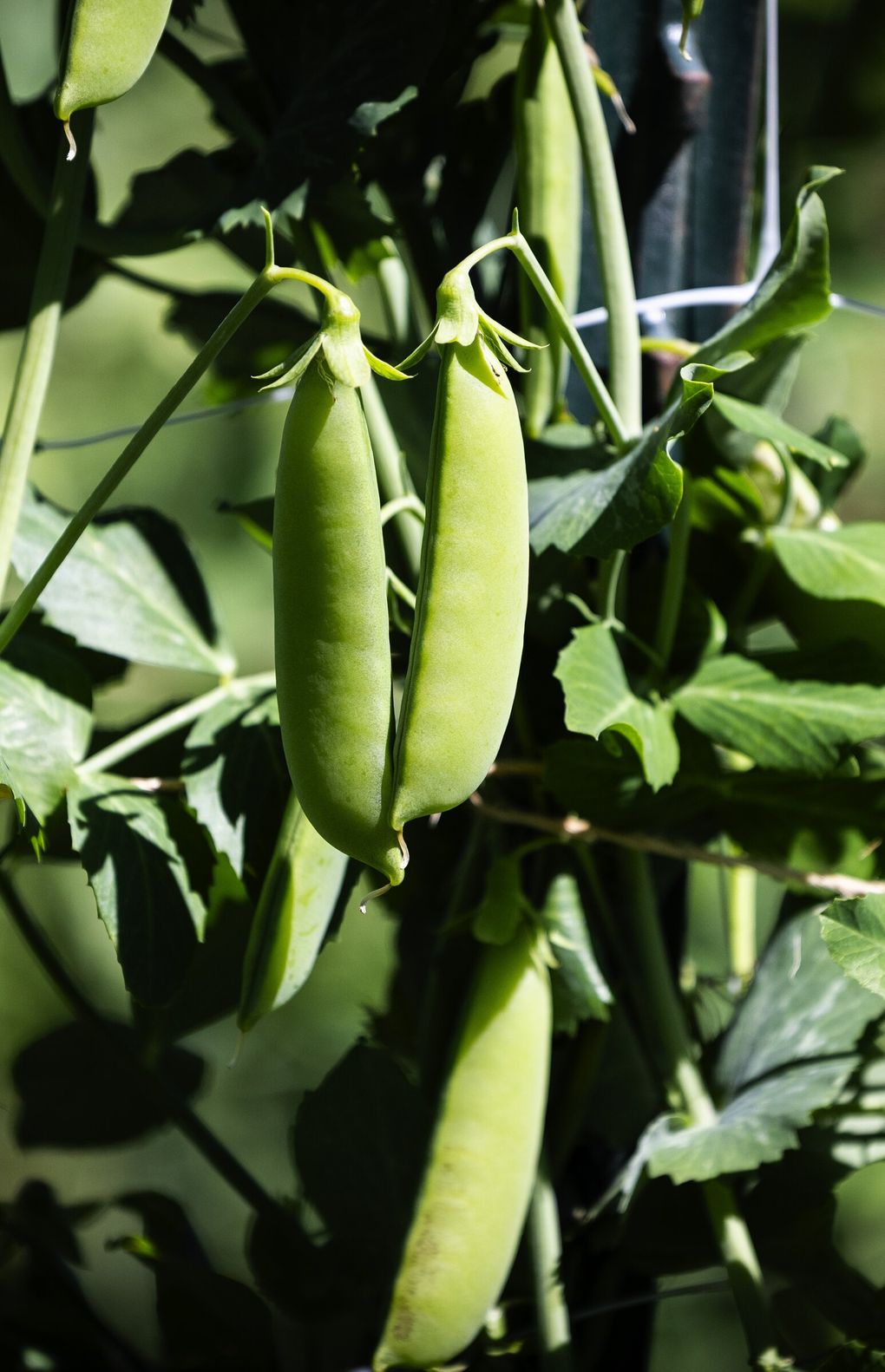
From the beginning, they produced some of the most beautiful vegetables that Clay Hinton, produce manager of the Skagit Valley Co-op, has ever seen, with “life” to them that was “so beyond,” he says. Long Hearing’s 36 current co-op offerings include crunchy snap peas, baby turnips as frosty white as a snowy mountain peak, blunt Bolero carrots.
Hinton himself was inspired to sign on as a seasonal worker at Long Hearing one summer, on top of his co-op job. From the experience, he learned what really happens when he orders a dozen bunches of beets — scheduling, harvesting, cleaning, packing, transporting.
But the lessons of the work went beyond practicalities.
“The team and the people put so much care and love into — ” He pauses a minute. “It’s like how you describe a home-cooked meal. There’s this essence of someone putting real energy into it. They’re doing home-cooked farming.”
He’s learned farming does something for the soul.
“The energy it takes to grow these things, we take it so for granted every day, just the amount of pure life force that goes into a piece of salad,” Hinton says. “It really did connect me to nature and the earth and everything going on around me a little better.”
Long Hearing’s accolades — and its expansion from the original one acre to 4½ acres of production — were hard-won through choking summer smoke and record heat and then record floodwaters last fall that put the land 4 feet underwater.
“We as farmers are on the front line of climate chaos, and I think that we’re on the front-front line of climate chaos in the Pacific Northwest,” Bragg says.
Even without the accelerating stress of climate impacts, work on a small organic farm, following strict federal regulations, has always been physical and ceaseless.
“By October it’s like crawling to the finish line in exhaustion, and then it’s raining … and everything is getting muddy, and you’re stuck in the field, and the carrots weigh twice as much as they should, because of all the mud,” Schwartz explains.
And the model, like the farm itself, is hard to scale up. The business wouldn’t succeed without a narrow and lucky set of circumstances.
Schwartz leases the land, which is on its third owner since she founded Blue Heron. Like her predecessors, current owner Lois Canright wants to keep leasing the land as a working farm. Currently on a 5-year lease, Long Hearing is negotiating for a longer term (they’ve asked for 50 years.)
The property is zoned for agricultural use, somewhat protected by Skagit County’s farm-friendly policies, so it can’t be developed into a luxury housing subdivision. Given its flood plain location, that’s unlikely to change.
The circumstances are particular to the people as well as the place. Canright’s father owned the first organic farm in New Jersey, and she notes that she could only afford the Rockport refuge because she and her brother — also a New Jersey organic farmer — benefited from the sale of her father’s family farm.
The finances become even more personal: Neither Canright nor Schwartz have children.
“I can be generous with this property. A lot of people really don’t have that choice, and that’s the clincher, right?” Canright says, seated under trees that have grown tall enough to shade the group in the years since Schwartz began farming. Most farmers need their businesses to pay for their own retirements or support the next generation, she notes.
Passing the batonIf there’s no single solution to small sustainable farming with mass support right now, individuals have found many small answers. Some notable ones relate to that original band of visionaries, including Schwartz, who rejected the most destructive farming practices of the post-Vietnam era and the federal government’s push to “get big or get out” of the profession.
Among them: Right across the river from Long Hearing is the original red-peaked Cascadian Farm building. Today Cascadian Farm is a global brand, currently owned by General Mills, depicted on the packaging of frozen foods and packaged goods around the world. For years, though, it was a working farm, originally founded by Gene Kahn, a charismatic young man who had dropped out of graduate school at the University of Washington for a cause that seemed more important. Kahn proved that organic foods could succeed on more than a small scale, though it grew into what’s sometimes called “industrial organic” foods, a distant cousin to his neighbors’ goals.
Schwartz crossed paths with Kahn when “he was driving a very old Volkswagen Bug, and broke down,” and her husband picked him up hitchhiking. After studying animal science at Washington State University, she’d seen ruined topsoil and mistreated animals on that era’s farms. Kahn, like Schwartz, believed things could be better. She left the dairy where she was working and joined Cascadian for 11 years (on top of her Blue Heron work), first for free and then for $1 an hour.
Today Cascadian’s property is more in line with its origins. In 2022 General Mills donated the 90-acre “home farm” to the Rodale Institute, often called the fathers of the modern organic movement. The land is now home to the Rodale Institute Pacific Northwest Organic Center, one of a network of regional research centers on organic farming. It’s planned as a spot to study regional crops and farming practices, and as a demonstration farm and education center.
Research director Arianna Bozzolo says trials are underway growing hazelnut trees in “alley cropping,” in which trees are interspersed with rows of other crops to diversify and increase profitability. Other trials include growing elderberries and aronia, high-antioxidant fruits that Northwest organic farmers are interested in growing but with little data on how to succeed. Once the institute has more of a team in place, they hope to start long-term vegetable production trials. If all goes well, it will be a beacon of information and support.
Not every farm succession is replicable, but Bragg knows that many individual approaches can add up to something bigger. Her own off-farm job is as a land transfer specialist with the American Farmland Trust, chartered in 1980 to address the loss of farmland to urban sprawl and to find common ground between farmers and environmentalists. It has protected more than 8 million acres of farmland.
Over the last two years, Bragg has counseled more than 40 ranching and farming families, plus leading frequent workshops in the region on navigating the financial, practical and emotional dynamics of leaving the land. It’s a multilayered process, moving at what Bragg calls “the speed of trust.”
Sometimes she highlights options like leasing land rather than selling it. While many aspiring farmers see leasing as an inferior option to owning, leasing can improve the success rates of new farms, and strong protections can be built into the lease for all parties.
What’s rare, Bragg now realizes, is the clarity that Schwartz had “to sit down and say, this is actually what I want for the future of my farm, ranch or property.”
Ironically, the off-farm job has benefited Long Hearing too — not just in immediate relief from financial stresses, but in qualifying the farm for loans from lenders who wouldn’t consider farm income alone a reliable guarantee.
Long Hearing counts about 120 families in its sliding-scale weekly CSA, plus its produce can be found at outlets like the co-op, a seasonal Darrington farm stand and the Mazama Store down the North Cascades Highway.
If they broke down the salaried work by hours, it certainly wouldn’t work out to minimum wage. How can it be worth it?
Maybe it’s not surprising that farms founded in an age of idealism are being passed down to the same.
“I’ll just say that the lifestyle is real,” Canright says on a breathtaking late-spring day, taking in the crisp air and rows of new seedlings. She looks across at Schwartz and the Long Hearing crew. “Part of your benefit that doesn’t go on the balance sheet is where you get to be and what you get to do, and the incredibly good feeling — and karma, if you believe in it — about doing what you do.”
Rebekah Denn: rebekahdenn@gmail.com. On Instagram: @rebekahdenn. Denn, a two-time winner of the James Beard Award, writes about food for several local and national publications. Ken Lambert is a Seattle Times staff photographer: klambert@seattletimes.com.
| # | Наименование новости | Тональность | Информативность | Дата публикации |
|---|---|---|---|---|
| 1 | From Farm to Brand: Adding Value to Organics | 0 | 2 | 14-07-2026 |
| 2 | Building a Market for Organic Vegetable Systems: Lessons from a Successful Transition | 0 | 5 | 21-07-2026 |
| 3 | How Maine farmers are weathering climate change | 0 | 38.42 | 27-07-2026 |
| 4 | Cyclospora outbreak drives shoppers towards local farmers | 0 | 7.27 | 23-07-2026 |
| 5 | Organic Field Day | 5 | 5 | 17-07-2026 |
| 6 | Ingredients revolution: the race to survive climate disruption | 0 | 5 | 06-07-2026 |
| 7 | Annex Theatre collective digs up onstage treasure for 40-plus years | 0 | 9.84 | 09-07-2026 |
| 8 | 100% organic free-range egg production could have negative consequences for climate and nature | 0 | 12.13 | 29-07-2026 |
| 9 | ‘Agriculture is always evolving’: NI’s young farmers turning to latest tech in face of industry challenges | 0 | 10 | 09-10-2024 |
| 10 | « On perd un agriculteur toutes les heures, jour et nuit » : un entrepreneur veut sauver la transmission des fermes de France | 5 | 7 | 02-06-2026 |