Просмотр новости
Найдите то, что Вас интересует
 Спутники
 РН
РН SpaceX
 Роскосмос
 NASA
NASA
СпутникиРНSpaceXРоскосмосNASAScientists engineered tobacco and lettuce to produce myoglobin, a key meat protein, paving the way for sustainable plant-grown meat alternatives.
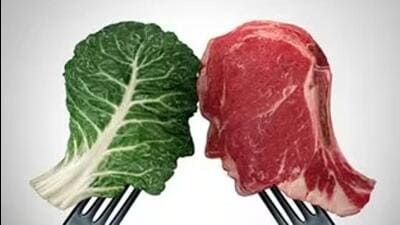
Scientists have engineered lettuce and tobacco plants to produce myoglobin — the protein that gives meat its colour, taste and much of its nutritional iron — directly inside their leaves, offering a potential new route to more realistic plant-based meat that doesn’t rely on livestock or industrial fermentation vats.
The study, published in Frontiers in Plant Science on Thursday, was led by researchers at Imperial College London working with Cambridge-based biotech firm Kyomei Ltd, along with collaborators at the University of California and Nanchang University in China.
Myoglobin is the molecule that makes muscle red and gives meat its distinctive taste — it’s abundant in the heart and skeletal muscle of all vertebrates, including the animals consumed. Most attempts to replicate it for plant-based meat rely on microbial engineering: inserting the gene into bacteria or yeast and growing it in bioreactors, the method Impossible Foods uses to make its soy-derived “leghemoglobin.” This experiment instead put the gene to work inside a living crop.
Researchers used a device nicknamed a “gene gun” to fire copies of the myoglobin gene — cloned from pigs and cattle — directly into the chloroplasts of tobacco and lettuce seedlings. Chloroplasts are the compartments inside plant cells that carry out photosynthesis; unlike most of a plant’s genetic material, they carry their own small, separate genome — a relic of their origins as free-living bacteria billions of years ago.
“Due to their bacterial ancestry and their high number of copies per cell, chloroplasts are generally much better at making large amounts of protein than the cell nucleus,” said Dr Alexia Groff, a researcher at Imperial College London and the study’s lead author.
To be sure, tobacco isn’t edible and none of its myoglobin is headed for a dinner plate — it served as a testing ground. Tobacco’s chloroplast genome is among the best understood and easiest to modify of any plant, making it what scientists call a “model” organism, used to prove a technique before attempting it in a food crop.
As Groff put it, tobacco was chosen “because it is the best model plant for developing this technology, and lettuce because it is an edible crop that could eventually be used for food ingredient production.”
The engineered seedlings grew into normal, fertile plants that flowered and passed the new gene on to their seeds. Measurements found myoglobin yields of roughly 800 mg per kilogram dry weight in tobacco and 810 mg/kg in lettuce — modest next to real meat, which contains 8,100–11,200 mg/kg, but the authors argue crops could ultimately outperform livestock on a per-hectare basis, given far lower water and land demands.
There is, however, a catch that limits the ingredient’s usefulness for now: only around 35% of the plant-grown myoglobin was found to have its essential iron-carrying heme molecule properly attached, compared with 80% for myoglobin made in bacteria. Heme is what actually gives meat its red colour and much of its flavour — a myoglobin protein without it is structurally intact but functionally inert. The researchers say boosting the plant’s own heme supply will be key to making the ingredient viable.
“Plants can be engineered to produce the animal protein myoglobin in their chloroplasts, the energy factories for photosynthesis. This could provide a more sustainable way to produce an important ingredient for plant-based meat products,” Groff said.
Groff added that the next step would be extracting and purifying the protein using standard industrial methods before it could be blended into existing meat alternatives to improve their colour, flavour and nutritional profile.
Co-author Dr Kyoko Morimoto of Kyomei, which partly funded Groff’s doctoral research, suggested a second possible use: “We hope that edible lettuce, modified to express myoglobin, could also one day serve as a heme-iron-enriched biofortified food, depending on legislative approval.”
| # | Наименование новости | Тональность | Информативность | Дата публикации |
|---|---|---|---|---|
| 1 | Ключевой мясной белок впервые вырастили в листьях латука | 0 | 9.15 | 26-08-2026 |
| 2 | Med en ”genpistol” får forskarna sallad att tillverka köttprotein | 0 | 10.38 | 13-08-2026 |
| 3 | Ученые смогли внедрить гены свиньи в салат ради мясного вкуса | 0 | 21.11 | 06-08-2026 |
| 4 | Team turns corn into natural replacement for artificial food dyes | 0 | 6.05 | 07-08-2026 |
| 5 | Ученые Новгородского университета придумали овощную альтернативу лакмусовой бумаге | 0 | 0 | 19-08-2025 |
| 6 | U of G Prof Discovers Plant-Based Solution to Target Leukemia Weakness | 0 | 19.09 | 19-06-2026 |
| 7 | Ученые внедрили гены свиньи в салат, чтобы он обрел вкус мяса | 0 | 10.35 | 06-08-2026 |
| 8 | СМИ: ученые вывели овощи, способные расти в условиях Марса | 0 | 0 | 19-01-2018 |
| 9 | Разработан корм для сельхозживотных на основе растительных отходов | 0 | 0 | 12-09-2025 |
| 10 | Scientists BUILD a cell from scratch: Synthetic organism can feed, grow, copy its DNA and divide in world-first breakthrough | 6 | 7 | 02-07-2026 |