Просмотр новости
Найдите то, что Вас интересует
 Спутники
 РН
РН SpaceX
 Роскосмос
 NASA
NASA
СпутникиРНSpaceXРоскосмосNASAThis account of the tech elite crushing the nascent union organizing in their shops struck me primarily for the naivety of the workers–highly educated people who legitimately believed that if they stated their desires, their bosses would not simply destroy them. It was against this backdrop that Twitter workers pressured their bosses to ban Trump […]
The post Tech Union Busting appeared first on Lawyers, Guns & Money.
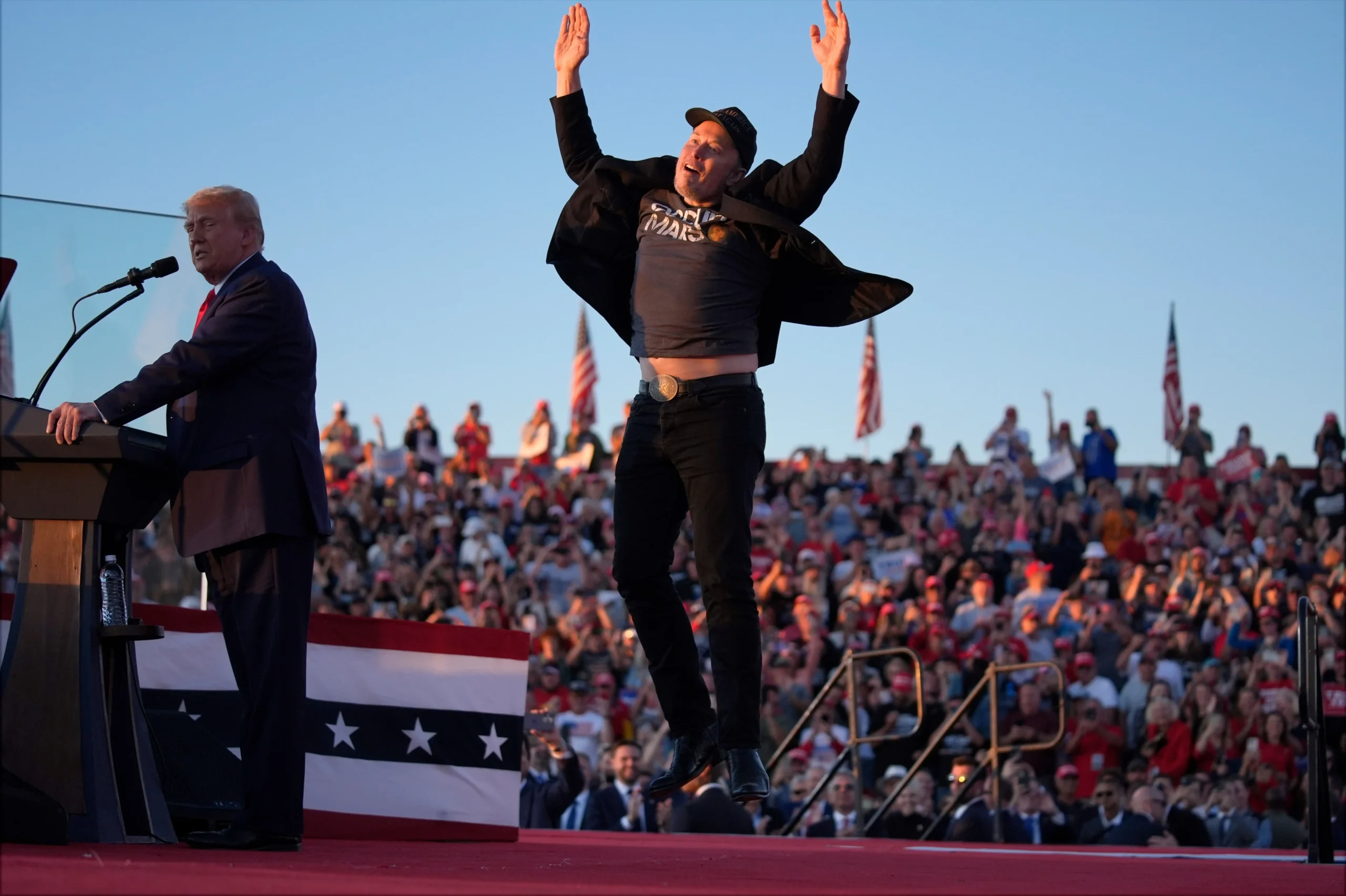
This account of the tech elite crushing the nascent union organizing in their shops struck me primarily for the naivety of the workers–highly educated people who legitimately believed that if they stated their desires, their bosses would not simply destroy them.
It was against this backdrop that Twitter workers pressured their bosses to ban Trump after the January 6 insurrection. By then, such acts of resistance were increasingly legible as part of a shared repertoire of collective action in the industry. As the world watched software engineers, designers, and product managers challenge their employers over war, climate, and democracy itself, more and more people realized that even in the most powerful firms in the world, workers could still fight for what was right. Across companies and campaigns, these fights had coalesced into something unmistakable: a tech worker movement.
Five years later, that once-promising landscape looks nothing like it did. Tech worker organizing now faces formidable opposition: a class of tech billionaires that has banded together and thrown its allegiance to the far right, standing behind the very president whom the industry once condemned. Leading the charge was Musk, who became one of Trump’s most fervent backers, pouring nearly $300 million into Trump’s 2024 campaign, making Twitter’s new owner the largest individual donor in the race. Meanwhile, Jeff Bezos and Mark Zuckerberg each wrote million-dollar checks to the inaugural committee. Even the liberal old guard, including Google and Microsoft as corporate entities alongside Apple’s Tim Cook and OpenAI’s Sam Altman, all joined in with their own seven-figure donations. The tech oligarchy, as this new alliance has come to be called, emerged from the realization among Silicon Valley’s elite that the Democratic Party had come to view the industry as too big, too powerful, and too unaccountable.
….
This brewing frustration among Silicon Valley’s billionaires erupted in 2022, when the industry plunged into a recession. Mass layoffs swept across the sector, and hiring freezes became the norm. As employers scrambled to restore profitability, they also seized the moment to reset the balance of power between themselves and their workers. Going beyond the necessary cost cutting, tech’s newly radicalized billionaires used this moment to wage class war on what they saw as an unruly workforce through the reassertion of managerial control.
Part of this counteroffensive meant winning the culture war and dismantling the left-liberal foundations that they believed turned their own workers against them. Nowhere was this clearer than in Elon Musk’s acquisition of Twitter in October 2022. Without a clear economic case for buying the platform—Twitter had always struggled to turn a profit—many speculated that the billionaire’s intention was to strike a blow against “liberal elites” and progressives while uplifting right-wing discourse. Far-right extremists celebrated the announcement, believing that Musk’s leadership would usher in a new era of unrestrained anti-establishment populism.
Initially, when we were brought on to support Twitter’s underground campaign, we were optimistic that a powerful union drive could counter Musk’s attack. That, however, turned out to be wrong: Musk’s first move was to immediately cut 80 percent of the workforce. He also gutted diversity, equity, and inclusion (DEI) programs and the human rights and AI ethics team, and curbed content moderation efforts, framing these cuts as a crusade against “wokeism” and the privileged, liberal-elite culture of tech workers. Those who remained were subjected to public humiliation and arbitrary tests of loyalty. Well-regarded engineers were forced to print out their code for inspection by Tesla engineers. Employees in good standing were told to justify their continued employment in written reports. And everyone was made to work long hours and meet impossible deadlines—with some even sleeping in the office to prove their dedication. Within a couple of weeks of the acquisition, the union met its demise.
For the public, Musk turned the company into a spectacle of domination, which he openly showcased on Twitter itself. And with any hope of internal dissent eliminated, he then reversed the ban on Trump, signaling loud and clear that Twitter no longer belonged to the unruly workers whom he purged from the company.
And for other industry elites who had grown frustrated with dealing with their own mutinous employees, Musk’s assault on Twitter’s workforce opened the floodgates, signaling to the rest of the industry that an all-out attack on its workers was not just possible but necessary. Shortly after, Microsoft followed suit, dismantling its AI ethics teams and cutting funding for DEI initiatives. Zuckerberg likewise clamped down on free expression, issuing new rules to limit political discussion on Facebook’s internal platforms. Dissent, once celebrated by these companies as a close cousin of disruption, was suddenly treated as a threat to be eradicated.
With their new drive to undo the left-liberal foundations that recast them as villains and to avoid another bout of Biden-esque regulation, tech’s billionaires found in Trump the perfect political partner. Together, they forged an alliance that fused deregulation with political repression—accelerating tech’s pursuit of profit, dismantling the very agencies meant to protect workers, and slashing social protections like healthcare, all while eroding the social and political conditions that once fomented the tech workers’ revolt against them. Indeed, what defines the power of the tech oligarchy is precisely their ability to operate not just as economic but as political actors—shaping public discourse, installing politicians, setting policies, and even redefining the terms of governance itself. Ironically, the very class solidarity developed through the countless tech worker protests, open letters, and walkouts helped provoke its own gravest threat: a unified tech elite hell-bent on stamping out the movement.
I mean…how did you think this would go? I’m not being flippant or dismissive here. I understand the frustration. But I do think this piece gets at, if unintentionally, a broader issue in the organizing among highly educated workers, which is that they are very individualistic without a real sense of structural analysis and so they have a lot of optimism that they can win pretty easily and seem confused when that doesn’t happen, when the elites show the ultimate class-based solidarity and unite to crush them, using both their power as employers and the politicians that they buy (and are willingly bought). The anger this then engenders can sometimes be usefully channeled, where there is a public sector willing to listen, such as in the elite universities. But in tech companies? That’s not going to happen. It takes a lot to organize and you have to expect the forces of order to destroy you. It’s what happens when that occurs that determines a lot.
This div height required for enabling the sticky sidebar
| # | Наименование новости | Тональность | Информативность | Дата публикации |
|---|---|---|---|---|
| 1 | Trump’s Betrayal of Miami Cubans | 0 | 10.41 | 23-07-2026 |
| 2 | Bush Justices Vote to Hand Republicans Midterm Elections | 0 | 6.87 | 15-09-2026 |
| 3 | Friday Sports Thread | 0 | 6.49 | 18-09-2026 |
| 4 | Gee, I Wonder If There’s a Solution to This Impending Labor Market Crisis | 0 | 8.64 | 22-07-2026 |
| 5 | Elon, Elon, what a killer | -10 | 6 | 02-07-2026 |
| 6 | College Football Week 3 Thread | 0 | 10.76 | 19-09-2026 |
| 7 | Trump Guts the Forest Service | 0 | 5.48 | 04-04-2026 |
| 8 | Free Labor, Free Exploitation | 0 | 8.78 | 26-07-2026 |
| 9 | Erik Visits a (Latin) American Grave, Part 2,232 | 0 | 5.73 | 16-09-2026 |
| 10 | American Revolutions Lecture Series–Available for LGM Readers! | 0 | 7.22 | 18-09-2026 |