Просмотр новости
Найдите то, что Вас интересует
 Спутники
 РН
РН SpaceX
 Роскосмос
 NASA
NASA
СпутникиРНSpaceXРоскосмосNASASo far, the technology has been tested only in pigs. If it's successful in humans, it could one day power tools that monitor your health or deliver drugs or electrical currents inside the body
/https://tf-cmsv2-smithsonianmag-media.s3.amazonaws.com/accounts/headshot/Sara_-_Headshot_thumbnail.png)
Sara Hashemi | Daily Correspondent
September 25, 2026
/https://tf-cmsv2-smithsonianmag-media.s3.amazonaws.com/filer_public/b3/5d/b35d927c-99db-4447-80d5-53df2c4600cf/mit-bioreabsorb-01-press_0.jpg) Researchers tested the battery in an RFID tag that can be rolled up in a capsule and swallowed. It can then transmit information about the digestive tract to a reader outside the body.
MIT News
Researchers tested the battery in an RFID tag that can be rolled up in a capsule and swallowed. It can then transmit information about the digestive tract to a reader outside the body.
MIT News
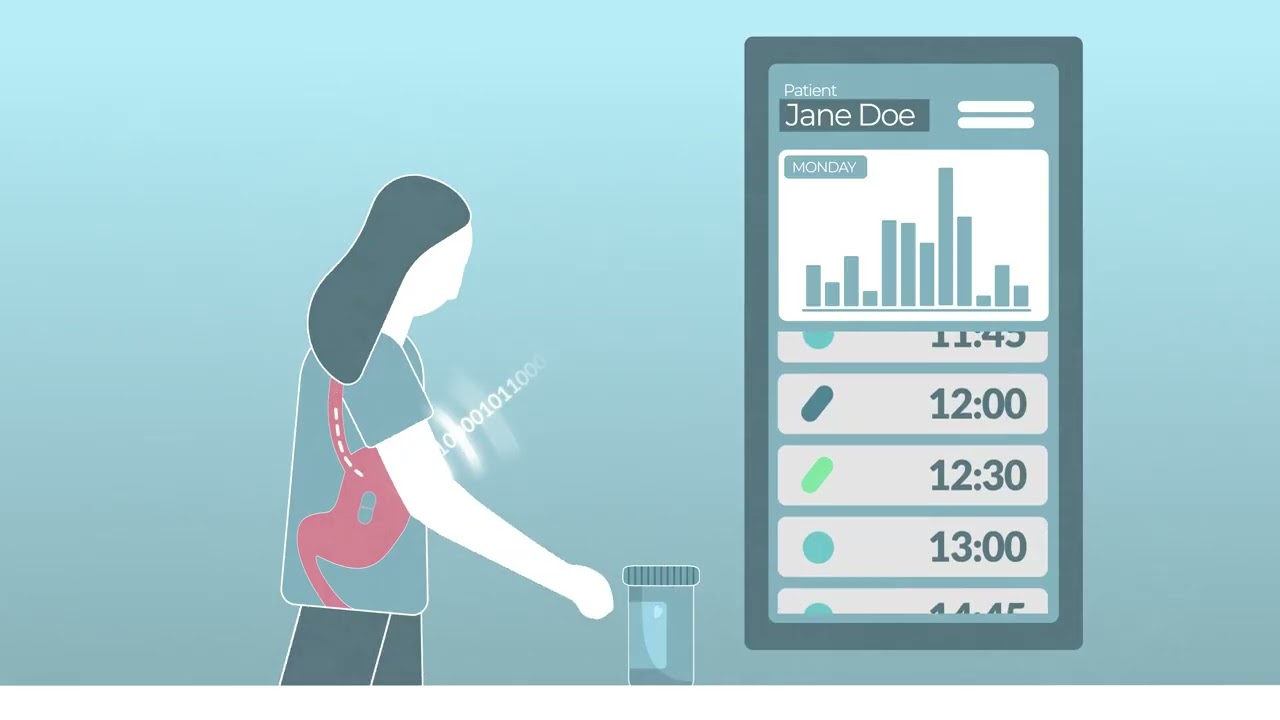
Ingestible sensors provide a helpful way to monitor a person’s health from the inside. But finding effective ways to power them has been a challenge. They typically use either standard batteries, which contain harmful chemicals, or external sources that provide energy wirelessly.
Now, scientists have created digestible, paper-based batteries that can power medical devices inside the body and eventually get broken down. The technology, described in the journal Nature Chemical Engineering on September 21, has so far been tested only in pigs. If further studies confirm its safety in humans, it could one day power all sorts of medical devices.
“For many of the systems we’re developing, we need power, and we power the system through different ways,” says study co-author Giovanni Traverso, a mechanical engineer at MIT and gastroenterologist at Brigham and Women’s Hospital, in a statement. “Often, we use batteries, so the question here was: Could we develop a battery that was bioresorbable, and then apply that across a range of application areas?”
Bioresorbable Batteries for Transient Ingestible Bioelectronics
The battery contains electrodes made with the metals magnesium and molybdenum, which are safe for human consumption in small amounts. In fact, we need little bits of these elements for essential bodily functions. A biodegradable liquid salt serves as the electrolyte, a substance that transfers charge-carrying particles between the electrodes.
One of the electrodes—the cathode—is bound together with cellulose fibers, which are found in plant cells and mean the system is paper-based. Edible rice-paper wrappings on certain candies inspired this design, reports Katherine Bourzac for Nature.
The entire battery is encased in natural waxes to prevent premature degradation in the stomach. “The wax coating is not simply packaging,” Traverso tells Isha Ishtiaq at Live Science. “It is a key design element that controls the functional lifetime.”
He and his colleagues made two versions of the battery of different sizes and voltages. Exposing them to an acidic liquid similar to gastric fluid revealed they would function normally in the stomach for about three days. After that, their performance waned, and the tech completely degraded within a few months.
The researchers then tested the batteries in two devices: an RFID tag that transmitted information from the stomach to a receiver outside the body, and a capsule that produces an electrical current to tell the body to make a hunger hormone called ghrelin. Both types of devices were inserted in the stomachs of live pigs, which have gastrointestinal tracts similar to humans.
The RFID tag worked in the animal, sending data to an external reader around five feet away. Meanwhile, 20 minutes of stomach tissue stimulation with the electrical current-producing capsule raised ghrelin levels by about 50 percent.
“The study offers a promising avenue towards improved transient electronic devices,” says Micaela Matta, a computational chemist at King’s College London who wasn’t involved in the work, to Michael Peel at the Financial Times. “Swallowable alternatives such as this represent a key improvement with respect to devices requiring invasive surgery for implantation and removal.”
Traverso and his team aren’t the only ones working on biodegradable batteries. Yin Lan, a materials scientist at Tsinghua University in China, tells Nature that the paper-based battery performs similarly to other digestible ones in development.
“The impressive part” of the new work, she says, “is the convincing integration of a degradable battery into realistic ingestible systems, including multiday gastric operation and large animal demonstrations.”
Traverso emphasizes that the benefits of biodegradable batteries are twofold. They can both break down in the body, he says in the statement, and “minimize environmental impact, because the materials will be degraded in the environment as well.”
January 3, 2024
August 15, 2025
August 1, 2022
December 22, 2025
December 5, 2019
| # | Наименование новости | Тональность | Информативность | Дата публикации |
|---|---|---|---|---|
| 1 | The search for consciousness inside LLMs | 0 | 10 | 20-08-2026 |
| 2 | Громадная дирижабельная станция, которая генерирует энергию прямо в небе. Возможно, ... | 0 | 4.7 | 27-09-2026 |
| 3 | Winzige implantierte Medizinsensoren kommunizieren drahtlos über Körpergewebe | 0 | 10 | 25-09-2026 |
| 4 | Такие батареи используются на МКС и в телескопе Hubble Американская ... | 0 | 7.81 | 27-09-2026 |
| 5 | Такие батареи используются на МКС и в телескопе Hubble Американская ... | 0 | 7.81 | 27-09-2026 |
| 6 | Here Are Some AI Doomsday Scenarios Researchers Say Could Put Humanity at Risk | 0 | 9.55 | 25-09-2026 |
| 7 | Российская компания «Моторика» разработала технологию очувствления протезов | 0 | 7.76 | 26-09-2026 |
| 8 | Фундамент для будущих внеземных колоний человечества закладывается уже сегодня. Китайские ... | 0 | 8.52 | 27-09-2026 |
| 9 | Crop forecasting enters the age of digital twins | 0 | 8.92 | 09-09-2026 |